With 26 entrants in two sections, the Northwest Illinois $5 Open was our most successful rated tournament to date. For the first time, I'm pleased to say, we drew players from Iowa, a milestone we've been hoping to pass for some time. In addition, many of our participants were new to rated chess: 11 out of the 18 players in the U1000 section were unrated, including Juan Meraz of Rockford, who won the section. Congratulations, Juan! (His daughter Yesenia, a veteran of the
Rockford Chess Challenge, finished eighth.)
Our eight-player open section was won by Luis Peralta of Moline. Both Luis and Juan finished the day with perfect 4.0 scores. (Complete standings may be found on our
tournament results page; click
here for official crosstables and post-event ratings.)
Also, there were doughnuts. Lots and lots of doughnuts. And snow. What was up with that?
W.Engel (1684)–L.Peralta (1922)
Northwest Illinois $5 Open (3)
Freeport, Ill., April 16, 2011
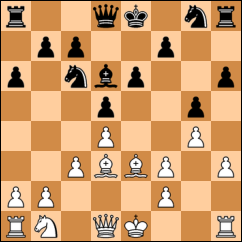
1.e4 e5 2.Bc4 Nf6 3.d3 h6 4.f4 d6 5.Nf3 Bg4 6.fxe5 Bxf3 7.Qxf3 dxe5 8.Qg3 Qd6 9.Nc3 Nbd7 10.0-0 0-0-0 11.Be3 a6
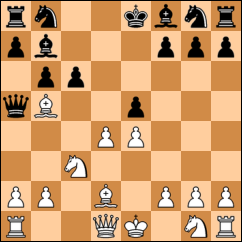
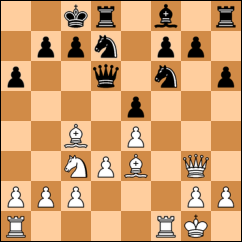
12.Bxf7 Qb4 13.Bb3 Kb8 14.Rf3
Will is clearly trying to double his rooks on the f-file, but 14.Rf2 is the better move for this. 14.Rf3 cuts the bishop off from the queen, leaving it defenseless. Even better than 14.Rf2 is 14.a3, chasing away Luis's bold queen before centralizing Will's queen's rook.
14...Nh5
Passing up the opportunity to challenge Will's momentarily defenseless dark-square bishop, thereby forcing him to trade that good piece away.
15.Qg6 Nhf6
15...Nf4!? 16.Bxf4 exf4 17.Rxf4 Ne5 blunts Will's advantage by forcing him to trade away some kingside cover, leaving open the diagonal his king is sitting on.
16.Raf1 Nc5 17.Nd5
It's not too late to chase that queen away with 17.a3.
17...Nxd5 18.exd5
Why weaken an active bishop by dropping a pawn in its path? Better to retake with the bishop, even though it means giving up the pawn on b2.
18...Nxb3 19.axb3 Qb5 20.Qe6 Bd6 21.Rf7 g5
21...Rhe8 drives Will's impertinent queen back to the kingside: 22.Qg4 Bc5 23.Bf2 Rxd5 Qxg7.
22.R1f6
As an alternative, 22.c4!? gains queenside space while patching the gap in Will's pawn structure.
22...Rde8 23.Qh3 Qxd5 24.c4 Qa5
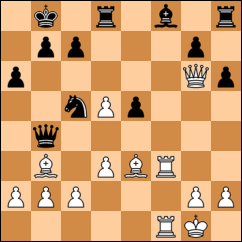
25.Kf2
Not the piece-losing 25.Rxh6?? Rxh6 26.Qxh6 Qe1+ 27.Rf1 Qxe3+ 28.Kh1 Qe2.
25...Bc5 26.Bxc5 Qxc5+ 27.Qe3 Qb4 28.h4?
Will gained a significant advantage early on, but it's been dwindling away. This miscue allows Luis to turn the tables on him. 28.Qe1 Qxb3 29.Qc3 is Will's best chance to keep the game close.
28...Qxb3 29.hxg5 hxg5 30.Qd2 e4 31.dxe4 Qxc4
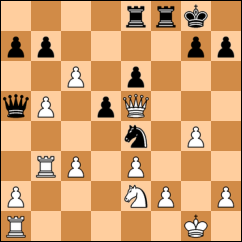
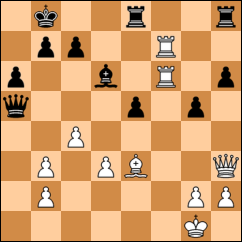
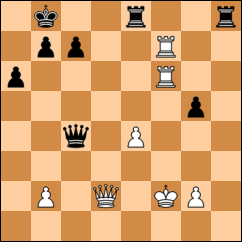
32.Qxg5??
Oof. Will isn't normally one to miss something like the two attackers trained on his e-pawn. He can defend it directly with 32.Qe3 Qc2+ 33.Qe2, or take a subtler damage-control approach with 32.Qc3 Rxe4 33.Qxc4 Rxc4 34.Kg3.
32...Rxe4
With Will's queen out of the way, 32...Qxe4! is the superior capture. The continuation 33.Qd2 Qh4+ 34.Kf3 Rhg8 reminds me of Spider-Man whipping around, wrapping up a bad guy in webbing. Ain't no getting out of that.
33.Rf8+ Rxf8 34.Rxf8+ Ka7 35.Qh5
Another dangerous misstep: 35...Qd4+ 36.Kg3 Qd6+ 37.Kh3 Qxf8 wins Will's rook.
35...Qc2+ 36.Kg1 Qxb2 37.Rd8
37.Qc5+ Qb6 38.Qxb6+ Kxb6 39.Rf6+ c6 40.Kf2 is the best of a lot of bad choices.
37...Qc1+ 38.Rd1 Qe3+ 39.Kh1 Re5
The slick 39...Qf2 40.Qg5 Rh4+ 41.Qxh4 Qxh4+ 42.Kg1 wins Will's queen for a rook.
40.Qf7 Qe2 41.Rf1 c5 0-1
There's still some fight left in the position, but none in Will -- he resigns.
K.Conter (589)–J.Meraz (unr.)
Northwest Illinois $5 Open (4)
Freeport, Ill., April 16, 2011
1.d4 d5 2.Nf3 Bg4 3.h3 Bxf3 4.exf3 a6 5.g4 Nc6 6.c3 e6 7.Bd3 h6 8.Bf4 g5 9.Be3 Bd6
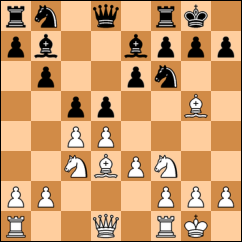
10.0-0
Ken's kingside pawn structure is too badly damaged for castling to seem like a good idea, especially with that bishop on d6 staring right down an open diagonal into the king's corner. Qb3, Nd2 and castling queenside seem like a better plan, perhaps accompanied by a pawn push on the h-file.
10...h5 11.Bd2?
Missing the danger. Ken has the option of gumming up Juan's pawn attack with 11.h4 gxh4 12.g5.
11...Qf6
Better to precede this with 11...hxg4 12.hxg4, bringing the king's rook into the attack.
12.f4?
Moving the pawn from relative safety to a thrice-attacked square. Eep.
12...gxf4 13.gxh5 Qg5+
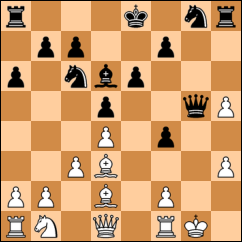
Ken has only three possible replies. The worst is 14.Kh2?? f3+ 15.Kh1 Qg2#. The best is to block with his queen, daring Juan to trade. Juan will take the dare, but not without exacting a price first: 14.Qg4 Qxh5 15.Qxh5 Rxh5 16.Be2.
14.Kh1 (That's the third.) Rxh5 15.Kh2
A bitter error, placing the king directly in the sights of a discovered attack. Better to blockade the f-pawn with 15.Qf3.
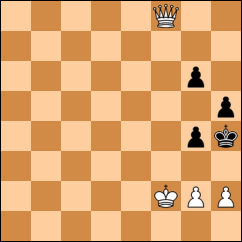
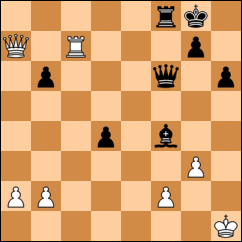
15...f3+ 16.Bf4 Bxf4+ 17.Kh1 Qg2# 0-1
...Qg2# is also possible on move 16.
Thanks to all our players and other guests, and special thanks to Carl Woll, who generously agreed to take notation for a player with a motor disability.
See you in May at the Pecatonic Octads!




 Posts
Posts

